Scan anything
Point your phone at any barcode. Cereal, yoghurt pouches, lunchbox snacks, juice. Milo reads the full ingredient list in seconds, so you never have to decode a label in the aisle.
Point your phone at any barcode. A friendly little monkey scores it out of 100, explains why in plain words, flags your family's allergens and finds a better swap.
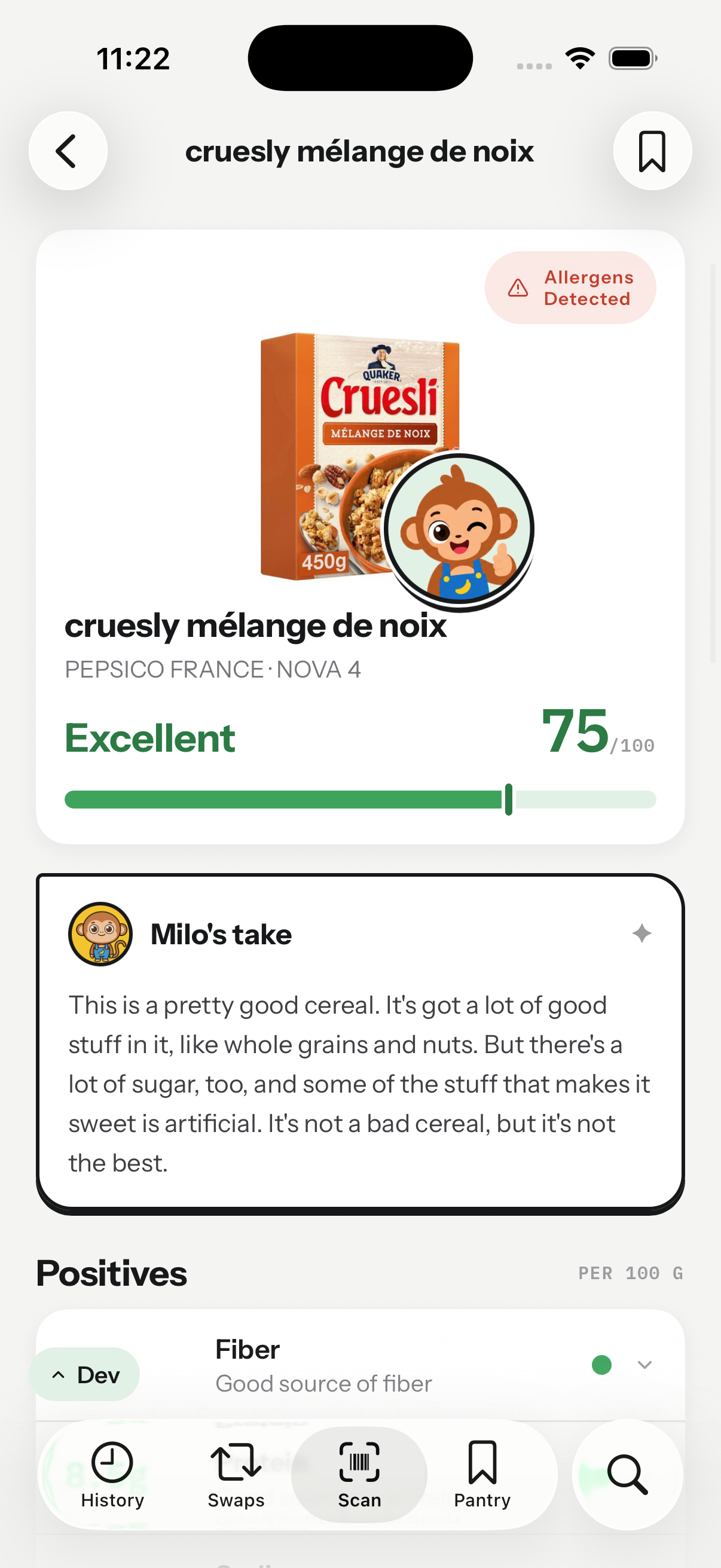
Point your phone at any barcode. Cereal, yoghurt pouches, lunchbox snacks, juice. Milo reads the full ingredient list in seconds, so you never have to decode a label in the aisle.
Milo checks the product against a database of millions of items and scores it 0 to 100 on nutrition, additives and processing. Then it tells you why in plain words, flagging added sugar, risky additives and your family's allergens.
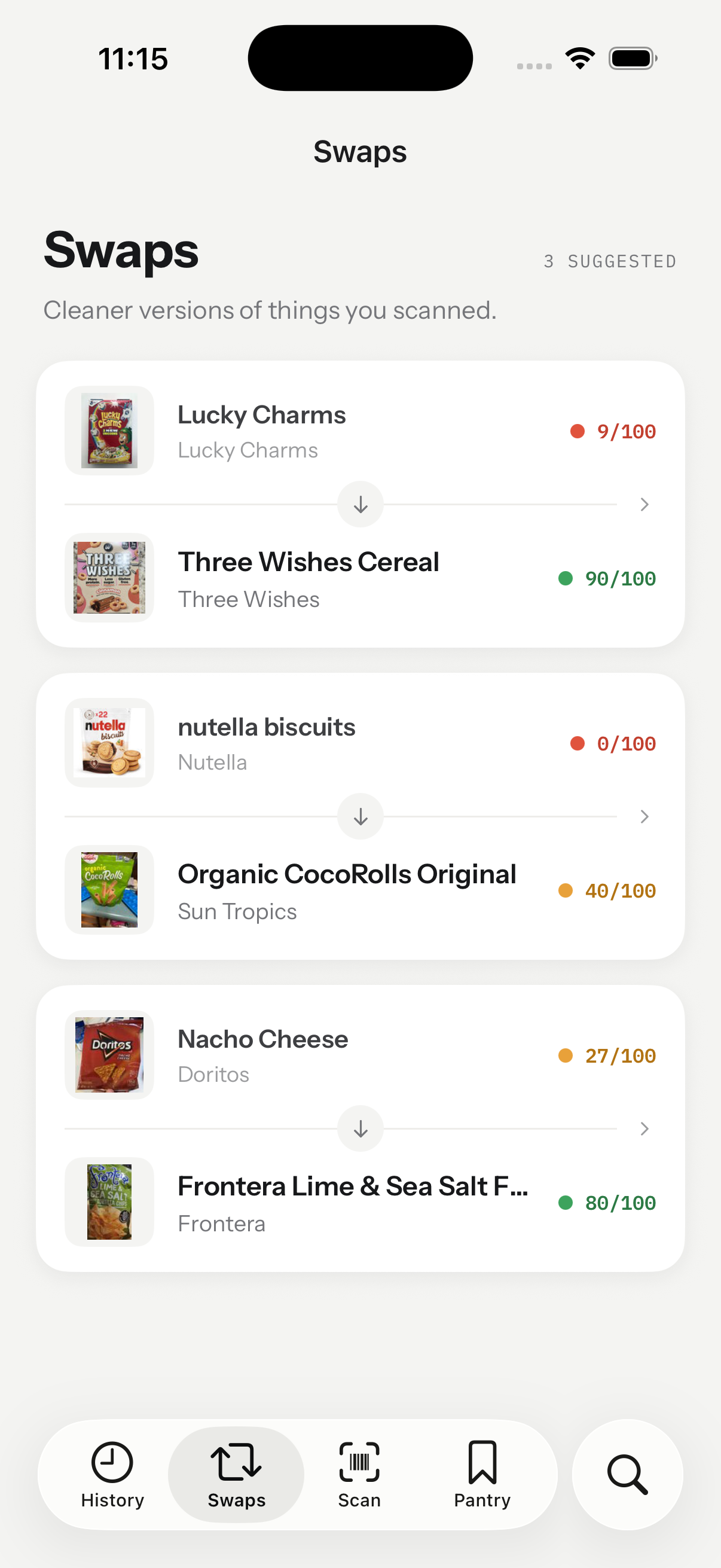
Every low score comes with a better-scoring option from the same shelf, so you leave with something your kid will still eat. Milo keeps your swaps so the change sticks.
Kids read the monkey. You read the score. Everyone leaves the aisle happy.




Four bands, one score out of 100. Nutrition per 100 g carries the most weight, then additives ranked by the strength of evidence against them, then how processed the food is. Read exactly how the score works.
Milo shows you what the packet hides and helps you trade it for something better, one lunchbox at a time.

A low score never leaves you empty-handed. Milo suggests something from the same shelf and shows both scores side by side.
Real scores from the app. Swaps stay in your Swaps tab so the change sticks.
Milo has no ads, no affiliate links and no brand deals. No company can pay to change a score, so the recommendation you see is the one we would give our own kids.
Every product gets a score from 0 to 100. Nutrition per 100 g carries the most weight: energy, sugars, saturated fat and salt count against a food, while fibre, protein and fruit, vegetables or legumes count for it. Additives are then ranked by the strength of the evidence against them, and the NOVA processing group and an organic bonus round it out. The method follows published tables, and we explain it in full in our guide to how the Milo score works.
Bad is 0 to 24, Poor is 25 to 49, Good is 50 to 74 and Excellent is 75 to 100. Each band has its own Milo face, so a child can read the result before they can read the number.
Milo is built for parents doing the shopping. The score uses the same published nutrition and additive science that applies to the whole family, and Milo’s take explains the result in words a busy parent can act on. It is not a medical tool and it does not replace advice from your GP or paediatrician.
Milo reads barcodes against the Open Food Facts database, an open, non-profit database of packaged foods from around the world, plus products added by Milo users. If something looks wrong on a product, you can report it from the app and we will fix it.
Snap a photo of the ingredient list and nutrition panel. Milo reads the label and builds the product on the spot, and it is scored like any other.
Choose the allergens that matter to your family once: dairy, eggs, fish, soy, peanuts, tree nuts, sesame, sulfites, gluten or corn. Every scan checks the ingredients and the may-contain traces and shows an Allergens detected badge at the top of the result. Always read the packet as well, because databases can lag behind recipe changes.
Not yet. Milo keeps one allergen list per account, so if you have two children with different allergies, select both sets and Milo will flag either. Per-child profiles are on our list.
When a product scores low, Milo looks for a better-scoring option in the same category and shows the two scores side by side. Swaps you keep stay in the Swaps tab so you can find them again on the next shop.
Pantry is the shelf of products you have chosen to keep, so you are not re-scanning the same boxes every week. History is every scan you have made, in order, which makes it easy to see how your shopping has changed.
If a product is missing its nutrition panel or ingredient list, Milo says so rather than guessing. You can add the missing details by photographing the label.
Milo is built for the United States, Australia and the United Kingdom and EU. It reads barcodes from all of them, understands per-serving and per-100 g panels, and handles multilingual European labels.
Yes. There are no ads, no affiliate links and no brand deals, and no company can pay to change a score.
Milo is on the iPhone App Store today. Android is coming soon.